As the cost of living continues to rise, more families are starting to rethink what “home” can look like. For many buyers, the traditional idea of one household and one generation under one roof no longer feels as practical as it once did.
That is why multi-generational living is becoming increasingly popular. Whether it is aging parents moving in with adult children, or adult children staying home longer while saving for their future, more families are discovering that living together can offer far more than just financial relief.
It can create connection, flexibility, support and long-term stability.
A Smarter Way To Manage Rising Costs
Housing affordability is one of the biggest reasons families are considering multi-generational living.
Instead of two households carrying two separate sets of expenses, families can combine resources and share costs such as:
- Mortgage payments
- Property taxes
- Utilities
- Insurance
- Maintenance
- Internet and household expenses
For some families, combining savings and income can make it possible to purchase a larger or better-suited home than either household could afford on their own. A property with an in-law suite, ADU or second kitchen can provide the space and privacy each generation needs while allowing everyone to benefit financially.
Rather than stretching to maintain two separate homes, families can work together toward one stronger financial foundation.
Finding the right location is the foundation of a smart home purchase. Should you choose Guelph? The posts below will give you food for thought:
- Guelph Vs Toronto: Is It Time to Move?
- How to Find an Up & Coming Neighbourhood in Guelph
- Why We Love Downtown Guelph
Easier Care For Aging Parents
Multi-generational living can also make caring for aging parents much more manageable.
Instead of parents living alone, far away or moving into assisted living earlier than necessary, a multi-generational home can allow families to provide support while still maintaining independence and dignity.
This could mean helping with meals, transportation, appointments, household tasks or simply being nearby in case something is needed. For aging parents, having family close can offer peace of mind. For adult children, it can reduce the stress of constantly driving back and forth or worrying from a distance.
There can also be a significant financial benefit. In Guelph, retirement and senior living costs can often range from approximately $3,900 to $8,100 + per month, depending on the residence, suite size, level of care and services required. Assisted living, memory care or more supportive care options can be even more expensive. For many families, that could mean spending $46,000 to $90,000+ per year on senior living alone.
While multi-generational living may not replace professional care in every situation, it can sometimes delay the need for paid retirement living, assisted living or additional home-care services. Even reducing those costs for a few years can create major savings for a family while allowing ageing parents to remain close to the people they love most.
Built-In Support For Childcare
Childcare is another major factor. For young families, having grandparents close by can be incredibly valuable. Even if grandparents are not providing full-time childcare, being available for school pickups, sick days, PA days, appointments, occasional evenings or last-minute help can make a huge difference.
While subsidised daycare has helped reduce costs for many families with younger children, childcare can still represent a major household expense. In Ontario, eligible licensed childcare fees for children under six in participating programs are currently capped at $22 per day. For one child in full-time care, that can still work out to roughly $5,700 per year. For two children, that number can climb to approximately $11,400 per year.
And that does not include the additional childcare costs that often come up outside of regular daycare or school hours. Babysitting in Guelph and across Ontario commonly costs around $18 to $25 per hour. At $20 per hour, one four-hour evening is about $80. Just two evenings per month would be roughly $160, or almost $2,000 per year. Add in before-school care, after-school care, PA days, summer camps and sick days, and the real cost of childcare can be much higher than the base daycare fee alone.
For parents whose workday starts earlier or ends later than daycare or school hours, that “gap care” can quickly add up. Even if grandparents are only helping with school pickups, after-school care a few days a week, sick days or occasional evenings, the savings can be meaningful. Reducing childcare costs by even a few hundred dollars per month could mean thousands of dollars saved over the course of a year.
But the benefit is not only financial. Children also get to build a deeper bond with their grandparents, and grandparents get to play a more active role in their day-to-day lives. For many families, that added support can make day-to-day life feel less rushed, less stressful and far more connected.
Privacy Still Matters
One of the biggest misconceptions about multi-generational living is that everyone has to be on top of each other.
The best multi-generational homes are designed with separation in mind. That might include:
- A basement apartment or walkout lower level
- A main-floor suite
- A separate entrance
- A second kitchen or kitchenette
- Separate laundry
- Private outdoor space
This allows family members to come together when they want to, while still having their own space when they need it. The goal is not to give up independence. It is to create a setup where each generation can live comfortably while still benefiting from the support of being close.
A strong example of this is 38 Wheeler Avenue in Guelph, a rare multi-generational property designed for real comfort, privacy and independence.
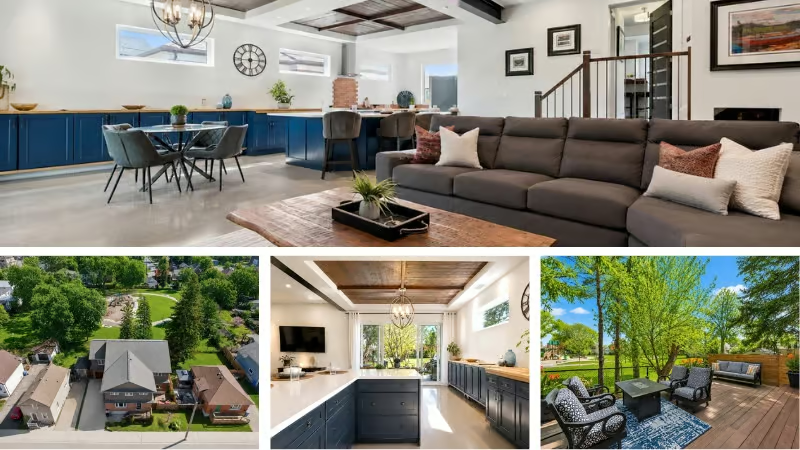
Unlike a typical basement setup, the in-law suite at 38 Wheeler Ave offers bright main-floor living, including a bedroom, bathroom and living area — so aging parents are not tucked away downstairs. This creates a much more comfortable setup for parents or extended family who want their own space while still feeling connected to the home.
The suite is also spread over two levels, which adds even more flexibility. One person could be relaxing in the main living area with a book while another watches the game downstairs, giving everyone room to enjoy their own routines without feeling crowded.
Privacy is also built into the design. The suite has its own separate entrance, along with access to a private brick courtyard that can be reached from the front of the home without disturbing the main household. At the same time, there is interior access between the suite and the main home, making it easy for family members to come together when they want to.
That balance is what makes 38 Wheeler such a special multi-generational opportunity. It offers independence, separation and privacy, while still allowing family to stay close enough for everyday support, shared meals, childcare help, caregiving and meaningful time together.
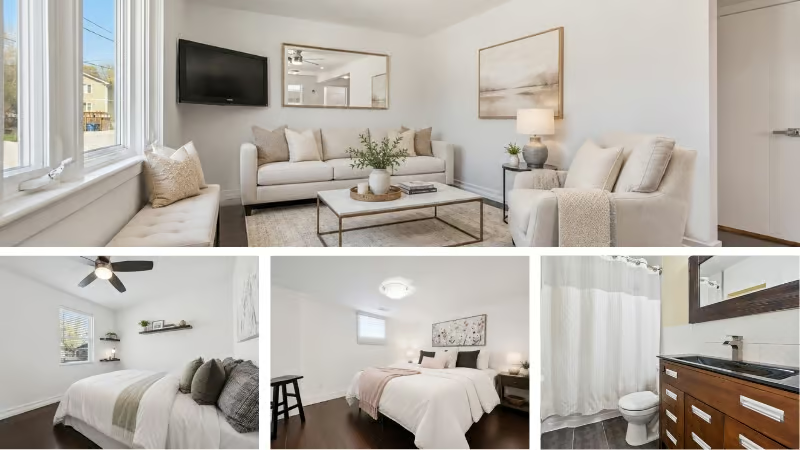
To view details on 38 Wheeler Ave, click here.
A Way To Build & Pass Down Wealth
Multi-generational living can also be a powerful wealth-building strategy.
Instead of each generation spending separately on rent, mortgages or care costs, families can pool resources into one property that may appreciate over time. This can help preserve wealth within the family and create more options for the next generation.
For parents, it may also offer a way to help adult children enter the housing market sooner. For adult children, it may provide a path to owning a better home, building equity and creating long-term financial security.
It can also make estate planning conversations more practical. While families should always get proper legal and tax advice, buying or structuring property with future generations in mind can sometimes make the transfer of wealth more intentional, organized and efficient.
More Connection & Quality Time
One of the greatest benefits of multi-generational living is the opportunity to spend more meaningful time with family.
In today’s busy world, it can be hard to find time for regular dinners, visits, school pickups, conversations and everyday moments. When multiple generations live under one roof — or in a home with a separate suite — those moments become part of daily life.
Grandparents get to be more present in their grandchildren’s lives. Children grow up surrounded by more family support, stories and traditions. Adult children can spend more time with aging parents without every visit needing to be scheduled.
It is not just about convenience. Strong family relationships and social connection have been linked to overall well-being, emotional support and a greater sense of belonging. For older adults especially, regular family connection can help reduce isolation and create a stronger sense of purpose.
Multi-generational living allows families to share more than a home — it allows them to share more of life.
Is a house purchase in the cards for you soon? The posts below can help you plan:
- 10 Things To Consider When Buying a Home
- New Build Vs Resale Home: What’s Better in Today’s Market?
- Checklist for Buying a Home
Is Multi-Generational Living Right For Everyone?
Of course, multi-generational living is not a one-size-fits-all solution.
It works best when families have clear communication, realistic expectations and the right property layout. Privacy, finances, household responsibilities and long-term plans should all be discussed upfront.
But for the right family, it can be an incredible option.
It can reduce monthly expenses.
It can make caregiving easier.
It can help with childcare.
It can create more quality time together.
It can allow families to afford a home they may not have been able to purchase alone.
And it can help build a stronger foundation for future generations.
As housing costs continue to rise, multi-generational living is becoming more than a trend. It is becoming a practical, flexible and meaningful way for families to support one another — financially, emotionally and every day.
Do you have more questions about the process of buying a house? Our top Guelph real estate agents are here to guide you every step of the way. Reach out to info@gowylde.ca or call 519-826-7109 to learn more.